Monday, February 4, 2019

Non-resident Nepalese Association (NRNA)-NCC-USA Oregon Chapter Organizes Free Health Camp for Nepalese Community in Portland, America

Importance of Acupuncture Therapy Stressed

By Dr Rabin Man Shakya


Portland, Feb 4 (Nepal Oregon News): A free health camp and membership drive program was organized by Non-resident Nepalese Association-National Coordination Committee USA- Oregon Chapter at Nekusing Memorial Theater (US West Coast Taekwondo Hollywood) in Portland on Saturday Feb 2, 2019.

Prof Dr Robert Kaneko,  Dr Sarah Krakauer and other five team medical members treated over sixty Nepalese Portlanders - in what was the first ever  health camp in Portland for members of the Nepalese community - in five hours for free  of charge, Diwakar Maharjan, owner and school director of Hollywood Taekwondo School and president of NRNA-NCC-USA Oregon Chapter told a journalist from Nepal Oregon News.

Acupuncture is a form of alternative medicine in which thin needles are inserted into the body. It is a key component of traditional Chinese medicine.

The health camp program was attended by activists of NRNA-NCC-USA Oregon Chapter, Nepaa Chhen, Nepali Association of Oregon, representative of Nepal Oregon News and scores of other Nepalese Portlanders.

On the occasion, brief presentations were made by Prof Dr Robert Kaneko, an acupuncture doctor and Dr Sarah Krakauer, a women's care expert.

Speaking on the occasion, Prof Dr Kaneko underlined the importance of acupuncture therapy and said that it has a written history of 2000 years.

Dr Kaneko went on to say that the history of acupuncture in the USA is related with the arrival of Chinese immigrants in the 19th century.

There are 47 states and Washington DC which have Acupuncture and Oriental Medicine  Laws. Likewise, there are 18,000 licensed acupuncturists in the United States, Dr Kaneko added.

Since the presentations by Dr Kaneko and Dr Sara were made in English,  NRNA-NCC-USA Oregon Chapter's vice president Daya Shakya translated them into Nepali at the program. Shakya also informed the gathering that NRNA Oregon Chapter was established in 2015 in Portland, Oregon.

At the end of the program, Nripendra Dhital threw light on membership drive plan. The program was followed by a lavish potluck dinner.

Ever since it was launched in  2015, the Oregon Chapter has organized different programs intended for the benefit of Nepalese community in Oregon.

The NRNA-NCC-USA Oregon Chapter is probably the only NRNA Chapter organization in America which can boast of its own office premise in Portland.


Dr Robert Kaneko making his presentation during the program.
Image may contain: 1 person, standing and indoor
Nripendra Dhital throwing light on membership drive plan

Image may contain: 7 people, people smiling, people sitting, people standing and indoor
Nepalese Portlanders being treated with acupuncture therapy at the program.


Enjoying dinner.


Dr Robert Kaneko (center) and his team.


(Rabin Man Shakya, who is a Nepali journalist in America, is also Media Director of NRNA-USA-Oregon chapter.)

Monday, January 28, 2019

Saudi Arabia: A Rogue State ?

By Rabin Man Shakya

Saudi Arabia is notorious for punishing the alien immigrants working in that country if they happen to commit felony or misdemeanor intentionally or unintentionally.

Actually, a number of Nepalese citizens employed in the Saudi companies on work permit are languishing in the Saudi prisons for big or small crimes, while a number of Nepalese have also been executed by the Saudi government for some crimes.

Oil-rich Saudi Arabia is a country of double standard and hypocrisy. They have one law for their regime supporters and citizens and other for regime detractors and migrant workers.

Meanwhile, Saudi Arabia is believed to have helped a number of its citizens in the US state of Oregon escape after being involved in criminal activities, in some cases helping them  get away with murder, according to news stories published in "The Oregonian".

When Saudis were arrested for crimes in Oregon, their passports were also taken away by the Oregon authorities before setting them free on bail.

Abdul al aziz Duways was arrested for DUI and rape case, Abdulrahman Sameer Noorah for hit and run, Waleed Ali Alharthi for possessing child pornography in computer, Suliman Ali Algwaiz for DUI and hit and run whereas Ali Hussain Alhamoud was arrested for multiple sex crime charges.

The Saudi officials from the Saudi Embassy or Consulate in the US not only stepped in by posting hefty bail amounts to free them but also (illegally) issuing second passport to flee (illegally) them to Saudi Arabia. This is totally outrageous and unacceptable.

These are just the tips of the iceberg.

"This is even more evidence that the Saudi government has acted to help its citizens escape justice for crimes committed in Oregon", Sen. Ron Wyden was quoted as saying in the The Oregonian.

Basically, Saudi Arabia is a real rogue state. A number of nations have been declared as rogue states by the US, but not Saudi Arabia. Past experiences have shown that notorious rulers and governments were patronized by the US to protect American interests.

The news stories about the crimes and disappearance of the Saudi students from Oregon are very disturbing. This raises a big question as to whether the Saudis are given a carte blanche in the US?

Also, it is to be noted that Saudis have mercilessly killed journalist Jamal Khassogi, an American of Saudi origin at the Saudi Consulate in Istanbul, Turkey on Oct 2, 2018. No concrete steps have been taken so far to punish the real rogue state.

9/11 catastrophe was orchestrated by the Al Qaida consisting of Osama bin Laden and other Saudi nationals but the poor Indian and Pakistani Muslims had to face the consequences and after-effects in the US at that time.

Monday, January 14, 2019

Ghyo Chaku Salu (Maghe Sankranti) : It's Time to Eat Ghyo (purified butter) and Chaku (hardened molasses)


Dr Rabin Man Shakya, Vice President, Nepa Chhen, Portland, USA.


It was so nice to get a Bhintuna on Facebook on the occasion of Ghyo Chaku Salu from Swaraj Shakya, my cousin brother and General Secretary of Nepal Russia Friendship and Cultural Association. Thank you very much and Suvay.  Also, Subhay is due to www.fb.com/newamhasika1/ for the image on Ghyo Chaku Salu.

Salu means the first day of the month in Nepal Bhasa whereas it is Sankranti in Sanskrit. The first day of the month Magh or Maghe Sankranti is known among the Newah people of Nepal as Ghyo Chaku Salu because this day is celebrated by the Newahs by eating Ghyo ( purified butter), Chaku (molasses), Lakhamari and Hamo Gwara.

Each year on Magh 1st, Newah people and the Nepalese people in Nepal and around the world should celebrate Ghyo Chaku Salu or Maghe Sankranti to raise awareness about our cultural values to the coming generations. Although different communities and indigenous groups observe Maghe Sankranti in their own ways, the Ghyo Chaku Salu celebrated by the Newah people is also remarkable because of its rich tradition, culture and cuisines.

This festival is also called the Festival of Sesames because sesame is used in many ways on this day: (1) Taking shower with sesames (2) Rubbing the body with oil and sesames (3) A Newah mother puts oil with sesames on heads of her children (4) Offering the pitri water with sesames (5) Offering sesames on fire and (6) Offering daan of sesames.

Newah people living not only in Nepal but also living in different countries of the world celebrate Ghyo Chaku Salu in their own way. Similarly, even though we are far away from the motherland - the Nepal Mandala - we the Newahs living in Portland, Oregon, USA keep up our cultural heritage alive by celebrating Ghyo Chaku Salu in our own way.

At a time when western culture and media are invading our values, culture and traditions, we must always strive to safeguard and protect our own culture. Festivals and culture are the key identity of the Newah people.

The people of Nepal celebrate Maghe Sankranti as the beginning of the auspicious month of Magh because preceding month of Poush is usually considered inauspicious. Also, from this Day, the day becomes longer than the night.

Traditional and cultural fervor is evoked by this festival long before the Ghyo Chaku Salu. Usually, the local markets of Kathmandu are hustling and bustling with the sale of molasses, Hamo Gwaras and Lakhamari long before the Salu.

According to Newah culture, the festival of Ghyo Chaku Salu is regarded as the Festival of Daughters or Mhyay Macha Nakha.

On this day, a Newah mother rubs her children's head with sesames on oil. Married daughters also come to their parent's house on Nakhatya on this day and have oil put on their head by their mom. That is why it is traditionally axiomatic to say "Ghyo Chaku Salu, Mhyay Mast Tinhu" (At the time of Ghyo Chaku Sanhu, the daughter folks jump with excitement).

There is also a Newah tradition which says that a married daughter cannot eat Ghyo and Chaku at her husband's home until a child is born from her. Since Ghyo Chaku Salu is a Mhyay Macha Nakha, the husbands of daughters should not visit the in-law's house on that day. Only married daughters and married cousin daughters are welcome on this day.

In Bhaktapur, on the day of Ghyo Chaku Salu, five Dipankar Buddhas are displayed. However, in Kathmandu, all the Dipankar Buddhas of the capital city are displayed at Hanuman Dhoka Palace on this day only once in twelve years. That is why this is a remarkable festival for the Kathmanduites. A day after Ghyo Chaku Salu, all the Dipankar Buddhas are displayed at Bhuikhel, Swayambhu with Samyak Puja and Pancha Daan.

Maghe Sankranti is the traditional celebration in which Sun God is the focus. Sun God is symbolized as a source of power, divinity and wisdom. Therefore, Sun God is especially worshipped on the day of Maghe Sankranti. According to astrology, this is the day when the Sun moves from the zodiac sign Sagittarius to Capricorn.

Also, thousands of people take a holy dip onto the confluence of the holy rivers of Nepal on this day.

Tharus are one of the indigenous communities of Nepal. Tharus celebrate the Day of Maghi Sankranti with a lot of fun, enthusiasm and much fanfare. Since Tharus start their New Year on this day, they celebrate it for five consecutive days.

The celebration of festivals like Ghyo Chaku Salu and other Newah festivals especially by Newahs abroad should be intended not just for joy and celebration, but also for instilling and inculcating values of culture and traditions on their children who are unaware about our rich festivals.

Increased cultural awareness of how we celebrate the traditional festivals, along with showcasing our traditional utensils, attires, foods, musical instruments etc may be helping to promote our culture and traditions despite the decreasing interest of children of Newahs living abroad in our culture and festivals.

(Rabin Man Shakya, a Newar journalist in USA, is a Sangha member of Nritya Mandala Mahavihara in Portland and is also a Life Member of World Newah Organization.)


Sunday, December 23, 2018

Yomari Punhi - an Important Festival of Newar Culture - Celebrated at Nepalese Temple in Portland, America

Newah Community in Portland, USA Loves Its Yomaris

Rabin Man Shakya


(Making Yomari together) 

Portland, Dec 23 (Nepal Oregon News): Yomari Punhi, one of the popular festivals of the Newah people of Nepal was celebrated this year with a lot of enthusiasm on Dec 22, 2018. Punhi means full moon day in Nepal Bhasa, the language of the Newah people of Nepal, and Yomari is a steamed dumpling which is made from rice flour with Chaku (a kind of sweet and solid molasses) and crushed sesame seeds.

Yomari Punhi is a post-harvest festival which falls on Thinla Thwo Punhi and which is the shortest day in Nepal. Newah farmers by this time have already filled their Bhakaris with paddy. This festival is celebrated with the wish and hope for better life and prosperity.

On the day of Yomari Punhi, programs of traditional masked dance are organized at the villages of Harisiddhi and Thecho at the southern part of the Kathmandu valley.

Yomari is also a symbol of Pancha Tatwo which consists of fire, aqua, air, sky and land. Rice flour represents land, molasses is taken as fire, water as aqua, empty space in yomari as sky and sesame seeds represent air.
(How is Yomari making going on?)

Today, unlike 20 years ago, celebration of Yomari Punhi is not just confined to Nepal, it is celebrated by the Newah people across the world. Yomari Punhi was celebrated by the Newah people living in Oregon, USA at the Nritya Mandala Mahavihara, Portland on Saturday with much fanfare and huge enthusiasm.

About 50 Nepalese and Americans from Oregon took part in a Yomari Punhi program at the Mahavihara. Among them are Prajwal Vajracharya of the Nritya Mandala Mahavihara, Daya Shakya, vice president of World Newah Organization, Bharat Banskota, president of Nepali Association of Oregon and journalist Dr Rabin Man Shakya of Nepal Oregon News, USA.

The Newah people of Oregon were seen sitting in a big circle inside the temple of the Mahavihara to make the traditional Yomari dumplings.


(Volunteers lending a helping hand.)

Sitting cross-legged in a circle, participants started making Yomaris to keep the guests moving throughout the evening. 


The Yomari Dayekegu program was participated by Guruju Prajwal Vajracharya and Maa Padma Laxmi Karanjit. Likewise, Pramod Karanjit, Dina Shakya, Bharat Banskota, Sharmista Amatya, Kabindra Amatya, Kusumabati Bajracharya, Anjali Vajracharya, Uppa Shakya, Suva Shakya, Pawan Pradhan, Naveena Shakya, Bijaya Maharjan,  Kabitanjali Amatya and Palistha Shakya were among the volunteers making the Yomaris. Also volunteering for Yomari Dayekegu were Kuon Hunt, Dale Hunt and Karen Pradhan.


For the Americans guests, the Yomari snacks were a welcome taste allowing them a chance to try a traditional Newah food which offer greater health benefits too. The program was followed by a potluck dinner.


(Yomaris are very yummy!)

 I remember back in 1970s our family in Kathmandu used to prepare the regular Yomaris and also Yomaris in the forms of deities, gods and goddesses like Kumar, Ganesh, Laxmi and Kuber to offer them to Goddess Annapurna. I remember during my childhood days, we as kids used to go to our neighborhoods in Kathmandu to ask for Yomari on this day and used to chant the traditional rhyme:

Tya Chhin Tya
BakachhinnTya
Lata Pata Kulechan
Juchhin Tya Yomari Chwamu
Uki Dune Haku
Byusa Maku 
Mabyusa Phaku
Byumha Lyase
Mabyumha Buri Kuti

Newahs of Portland also sang the same rhyme at the program. Similarly, on the occasion, Mahayana Sutra Mahima gatha was recited by Guruju Prajwal Vajracharya, Daya Shakya, Pradeep Bajracharya, Rabin Man Shakya and Pramod Karanjit.


(Guruju Prajwal Vajracharya, Pradeep Bajracharya,  Rabin Man Shakya and Pramod Karanjit reciting Mahayan Sutra Mahima.)


Newah heritage is full of myths, legends and folklores. And according to one of the mythologies related to Yomari Punhi, the emergence and origin of the Yomari Punhi celebration kicked off from Panchal Nagar which is Panauti today. The myth goes on to say that a married couple in Panchal Nagar had an unexpected and unprecedented paddy yield and that they made a new kind of bread that was made of the rice flour and was shared with the fellow village folks who really appreciated and loved it and hence the name Yomari (favorite bread).

According to the same folklore, the farmer couple presented Yomari to God of Wealth - Kuber - who was walking incognito. The God of Wealth rewarded the farmer couple with the riches.

There are many traditions and activities associated with Portland's Nritya Mandala Mahavihara but it is always looking for new ways to expand and explore those activities.

(Maa Padma Laxmi Karanjit giving away Yomaris to the guests.)


(Nepal Oregon News writer Rabin Man Shakya, a Newar journalist in America, is also a Life Member of World Newah Organization.)


Friday, December 21, 2018

Nritya Mandala Mahavihara Moves to Centerstage in Nepalese Community in Oregon, USA

Dr Rabin Man Shakya


Portland, Dec 21 (Nepal Oregon News): The Nritya Mandala Mahavihara - which is the only Nepalese  Buddhist temple in the USA so far - has  moved to centerstage in Nepalese community in Oregon by observing the age-old festivals of the Kathmandu valley and keeping alive the traditions and culture of the people of Nepal.

Promoting, preserving and protecting traditional and cultural values of Nepal are not an easy work, but Nritya Mandala Mahavihara in Portland is giving it a shot. The establishment of Nritya Mandala Mahavihara in Portland in 2009 has paved the way for local Nepalese Portlanders to carry on with lots of ritual and cultural ceremonies like the way it is done in the Kathmandu valley.

Balancing personal works, trips to different countries, Charya dance teaching,  observing Nepalese festivals are not always simple, but Prajwal Vajracharya is focusing on what is important in the long run.

Meanwhile, a Dakila ritual ceremony was held recently at the Nritya Mandala Mahavihara in Portland to commemorate the first anniversary of my mother Man Shova Shakya's demise.

Dakila (first anniversary of a person's demise) related rituals like 'Bhawana Puja' and 'Guru Mandala Puja' were performed by Prajwal Guruju. Bhawana Puja consists of offering flowers, sinha, raw rice, water and dhun (Nepali incense stick).The religious ritual during the Dakila tradition involved a number of objects including - Dhun, Dewa, Sukunda, Ita, Goja, Jajanka etc.

The Guruju chanted  gatha for the eternal peace of the deceased and wished for the accommodation in the Sukhavati Bhuvan.Guruju Prajwal Vajracharya on the occasion using Gan (Ritual bell) and Vajra chanted religious rituals praying for Vajrasatwo and Pancha Buddha. He said our universe is made of Panchatatwo: earth, water, fire, air and sky. We also offer praying to Vajra Satwo which provides salvation to humankind, said Prajwal Guruju.

At the end of the Dakila ritual, a Sira Daan in the name of my deceased mother was offered  to Prajwal Guruju. Me and my family express deep gratitude to Prajwal Guruju for finding time for the Dakila rituals despite his busy schedule.

Well, the Nritya Mandala Mahavihara has made celebrating the Newah festivals and observing the Newah style ceremonies centerpiece of its activities.

In fact, many Nepalese living in Portland know Prajwal for his commitment and dedication to enhance Nepalese arts, culture and traditions in Oregon.


(Rabin Man Shakya is a Nepali journalist in America)

Monday, December 10, 2018

Amritananda Mahasthavir and Nepal-Soviet Relations

By Dr Rabin Man Shakya
Former General Secretary, Nepal-Russia Cultural Association


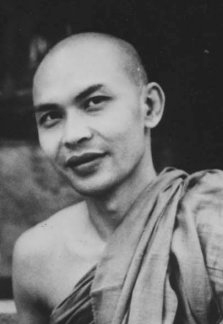
File:Amritananda mahasthavir.jpg
Ven. Amritananda Mahasthavir 
The diplomatic relations between Nepal and Russia (the former Soviet Union) was established on July 20, 1956 AD. The relations between Nepal and the Soviet Union at that time were not just confined to economic, technical, trade, literary and cultural aspects but to Buddhism as well.

Long before the diplomatic relations were established, a Russian Oriental scholar Ivan P. Minayev had visited Nepal during the period of Rana regime along with India, Sri Lanka and Burma in 1874-75. Later on, Minayev published articles in Russian journals about Buddhism in Nepal. Actually,  Minayev was the first Russian to visit Nepal.

In fact, there are a number of dignitaries and luminaries who played a very crucial role in strengthening and consolidating bilateral relations between Nepal and Russia on a public level. One of them is venerable Bhante Amritananda Mahasthavir.

Amritananda Bhante was not just a Buddhist monk. He was a widely known Buddhist personality whose activities zeroed in on research, history, culture and literature etc. Venerable Amritananda  Bhante has written and published hundreds of books on history of Buddhism and its different aspects.

Amritananda Bhante is a towering and pioneering personality who had worked very hard to publicize and disseminate the ideas and studies about Buddhism. "Buddhakalin Grantha" is the magnum opus of late Bhante. Actually, he is one of the most erudite  and learned Buddhist monks of Nepal.

The venerable late Bhante was a multi-dimensional personality and a quintessence of knowledge, scholarship and erudition.

 The Venerable Bhante rendered valuable help in bringing out the "Dharmodaya" monthly magazine from Kalimpong, India in 1947. The monthly magazine, which was mouthpiece of the Dharomodaya Sabha, strived to popularize and publicize Theravada Buddhism.

In an article entitled "Theravada Buddhism in Nepal" published in the magazine "Kailash", Ria Kloppenborg says:"The venerable Amritananda returned to Nepal in 1941 from a period of study in the Vajirama in Colombo, under the guidance of Narada Mahathera,  a well-known and active Sinhalese monk.

Kloppenborg further says:"He became involved in the works of the Nepalese Buddhists on several occasions and used his diplomacy and reputation to the advantage of the Theravada cause."

I had the opportunity to greet and be blessed by Amritananda Bhante and Sudarshan Mahasthavir at various programs organized by the then Nepal Soviet Cultural Association at Jamal Tole, Kathmandu. Likewise, I also had an opportunity to be blessed by Lama Bhante Hambo Dorje Gamboyev from Soviet Buryatia when he was in Kathmandu on a friendly visit.

It is to be noted that Buddhism has deep roots in the lives of the people in Buryat, Kalmik and Tuva Autonomous Republics of the Russian Federation and in Russian cities like Irkutsk and Chita. Buddhism is also a key factor in our bilateral relations. Buddhism spread to Buryatia, Kalmykia and Tuva Autonomous Republics of the Russian Federation through Mongolia and Tibet. And it was luminaries like Arniko, Bhrikuti and others who spread Buddhism in Tibet, according to historical chronicles.

My father late Pushpa Ratna Shakya was also one of the people who contributed in promoting Nepal-Soviet relations in people-to-people level. Actually, my late father was one of the founders of the Nepal-Soviet Cultural Association.

At age 19 in 1975, I became an active member of the then Nepal-Soviet Cultural Association which was then located at Jamal Tole, (opposite of Tri-Chandra College) in Kathmandu. Later on, I had the honour of becoming the general secretary of the Nepal-Russia Cultural Association from 1998 to 2002. Very few people know that late Venerable Sudarshan Mahasthavir was also the president of the Nepal-Soviet Cultural Association and that late Amritananda Mahasthavir was in the former Soviet Union several times on friendly visits.

It may be a coincidence but nearly half of my life was spent in countries like the former Soviet Union and the United States of America. For about a decade, I was in the former Soviet Union for higher studies.

According to the Western propaganda, there was no freedom of religion in the USSR. But Amritananda Bhante said that he saw people in Ulan Ude (capital of Buryat Autonomous Republic under the Russian Federation) carrying  out Buddhist rituals freely. As a matter of fact, Buddhism was the third most prominent religion in the former Soviet Union after Christianity and Islam, it still is in Russia.

Late Amritananda Mahasthavir was invited at the Nepal-Soviet Cultural Association at Jamal Tole, Kathmandu to share his experience about his visits to the Soviet Union.

Addressing the gathering at the conference room of the Nepal-Soviet Cultural Association in 1978, Ven Amritananda Mahasthavir said that the people in Soviet Buryatia and other autonomous republics of the USSR were free to exercise their rights to carry on Buddhist rituals.

Late Amritananda Bhante also expressed  the  view that the Buryati Soviet  Buddhists had a lot better lifestyle conditions than in other countries.

I remember late Amritananda Bhante saying that the Buddhists in Soviet Buryatia had unprecedented respect for the monks, a lot more honour, warm hospitality and kindness prevalent than in our country.

During his interactions at the Nepal-Soviet Cultural Association, I always found Amritananda Bhante to be supportive of friendly relations and mutual cooperation between Nepal and the former Soviet Union.

The Soviet cooperation for expansion of Science Faculty of the Anandkuti Vidyapeeth was also very remarkable. At that time, some sections of the people went on to the extent of wrongly calling the late Bhante "pro-communist".

Meanwhile, late Bhante Amritananda had played a significant role in organizing the Fourth World Buddhist Convention in 1956 in Nepal. The convention was participated by representatives from 37 countries. Before 1951, Nepal was totally an isolated country during the Rana regime. The Fourth World Buddhist Convention also paved the way to further expand Nepal's diplomacy with rest of the world.

Likewise, during the repressive regime of Rana autocracy, the Buddhist monks of Nepal were banished twice. Late Amritananda Bhante also played a proactive role in bringing a Sri Lankan delegation in 1946 headed by Bhante Narad Mahathera who requested the Rana Prime Minister Padma Shumshere JBR to lift the ban on Nepalese Buddhist Bhantes. After that, the Nepalese Buddhist Vichhus were allowed to come back to Nepal.

Finally, in conclusion, there is no doubt that Amritananda Bhante had played a constructive and positive role in enhancing and enriching the Nepal-Soviet Buddhist relations still at the time when our country was the Kingdom of Nepal and Russia was the Soviet Union.


While celebrating the centennial birthday anniversary of the late Bhante, the Nepalese people will always remember his illustrious and trail-blazing works coupled with his indomitable resolve to make Nepal a secular country.

Actually, there is no doubt that Amritananda Mahasthavir was one of the founding pillars for strengthening Nepal's Buddhist relations not only with the former Soviet Union but with other friendly countries like Burma, Sri Lanka, Taiwan, Thailand, Mongolia and so on.

Sunday, November 25, 2018

Halimali Exihibition (Sakimana Punhi) in Portland, America: Promoting Newar Culture in USA


Newar Buddhist  Temple Organizes Halimali Bwoyegu  Program in Portland, USA to Observe Sakimila Punhi


Dr Rabin Man Shakya


Portland, (Nepal Oregon News): Nepal is rightly described as the land of festivals and cultural carnivals. Festivals are a quintessential part of the life of the Newah people. Similarly, festivals are important factors that enliven the Nepalese culture. They have added to the cultural richness of the nation.

It goes without saying that festivals, rituals and traditions, which are the embodiment of a nation and national glory, are always in need of three Ps (preservation, protection and promotion).

In this age of globalization, thousands of Newah people have settled in different countries. Newah families and their children living abroad are familiar with major Newah festivals but many of them may be unaware about festivals like Sakimila Punhi.

It is with this purpose in mind that a Halimali Bwoyegu program (artistic display of different fried grains including  wheat, puffed corns, fried  soya beans, and peanuts and different kinds of fruits) was organized at Portland's Nritya Mandala Mahavihara on Saturday, Nov 24, 2018 to celebrate Sakimila Punhi.

The Halimali Bwoyegu program on the occasion of the Sakimila Punhi organized at a Buddhist Mahavihara with participation of a Buddhist Guruju is the first time in the entire history of the Nepalese community in the USA.

On the Day of Sakimila Punhi, people from Newah community of the Kathmandu valley celebrate the day by making display of different grains, puffed corns and fruits.

Different Bhajans (religious hymns) are also recited on the same day.

The Halimali exhibition in  Portland, USA is a testimony of the fact that today the celebration is not confined to just the Kathmandu valley or Nepal only.


(Nepalese Portlanders preparing Halimali Bwoyegu)


Sakimila Punhi (also known as Sakimana Punhi) is one of the full moon days in Nepal Sambat calendar on which the Newah people eat boiled arum, sweet potato and different fried grains.

Halimali Bwoyegu program in Portland was led by Guruju Prajwal Ratna Vajracharya and participated by Pradeep Vajracharya, Kusumabati Vajracharya, Dina Shakya, Naveena Shakya, Pramod Karanjit, Sharmista Amatya, Ranjeeta Shrestha, Palistha Shakya and other Nepalese Portlanders.


(Prajwal Guruju (far right) and other participants chanting Buddhists Tutas.)


On the occasion, Prajwal Vajracharya of the Nritya Mandala Mahavihara shed light on the importance of celebrating festivals like Sakimila Punhi.


Vajracharya underlined the significance of Halimali carnival with the health point of view.

Vice president of World Newah Organization Daya Shakya said that celebration of Sakimila Punhi in Portland, USA demonstrated its growing relevance and importance.

In addition, various Buddhist Tutas like Naam Sangiti, Bandeshree and Daan Balen were recited by Guruju Prajwal and other participants that included Nepalese Portlanders and some American Buddhists of the Mahavihara.

Likewise, at the program, octogenarian Buddhist activist Shanta Ratna Shakya (now on a visit to the US) chanted Sheel Prarthana and Tri Ratna Gatha.

(Octogenarian Buddhist activist Shanta Ratna Shakya chanting Sheel Prarthana.)


Shakya, who was the president of Gyanmala Bhajan Khala, Swoyambhu and Nepal Rastriya Gyanmala Samiti, also performed some Gyanmala bhajans.


"Gyan Mata Sita" written by Maha Pragya Bouddha Rishi and "Ragami Nugalaya Gunu Gunu Noyeka" written by Durga Lal Shrestha were the bhajan renditions performed by Shakya.

At the end of the program,  artistic Halimali display was jumbled and mixed up as per tradition by small kids who were present at the ceremony.


(At the end, kids  jumbling and mixing up Halimali)


The program which was participated by about 50 Newahs and Americans from Portland was followed by a pot-luck dinner. Attendees at the program included Sangha members of the Mahavihara, office bearers of Nepali Association of Oregon (NAO), Nepaa Chhen, NRNA-USA-Oregon Chapter and representative of Nepal Oregon News.

(Dinner is ready.)


(Shanta Ratna Shakya, left, Prajwal Vajracharya and Anastasia Roderick.)

(Group photo)


(Nepal Oregon News writer Rabin Man Shakya is a Newah journalist in America)

In Vajrayana Buddhism, a Dakini is the Ultimate Personification of Fierce Feminine Wisdom: Prajwal Vajracharya

Four-week Teaching Course on 'Embodiment of the Dakini Praise' Wraps Up Rabin Man Shakya Portland, Sept 20 (Nepal Oregon News): A fo...