Tuesday, October 22, 2019

Dashain Celebrated in Portland, America by Nepali Association of Oregon (NAO)

Bijaya Dasami Brings Joy to Nepalese Portlanders

Dr Rabin Man Shakya


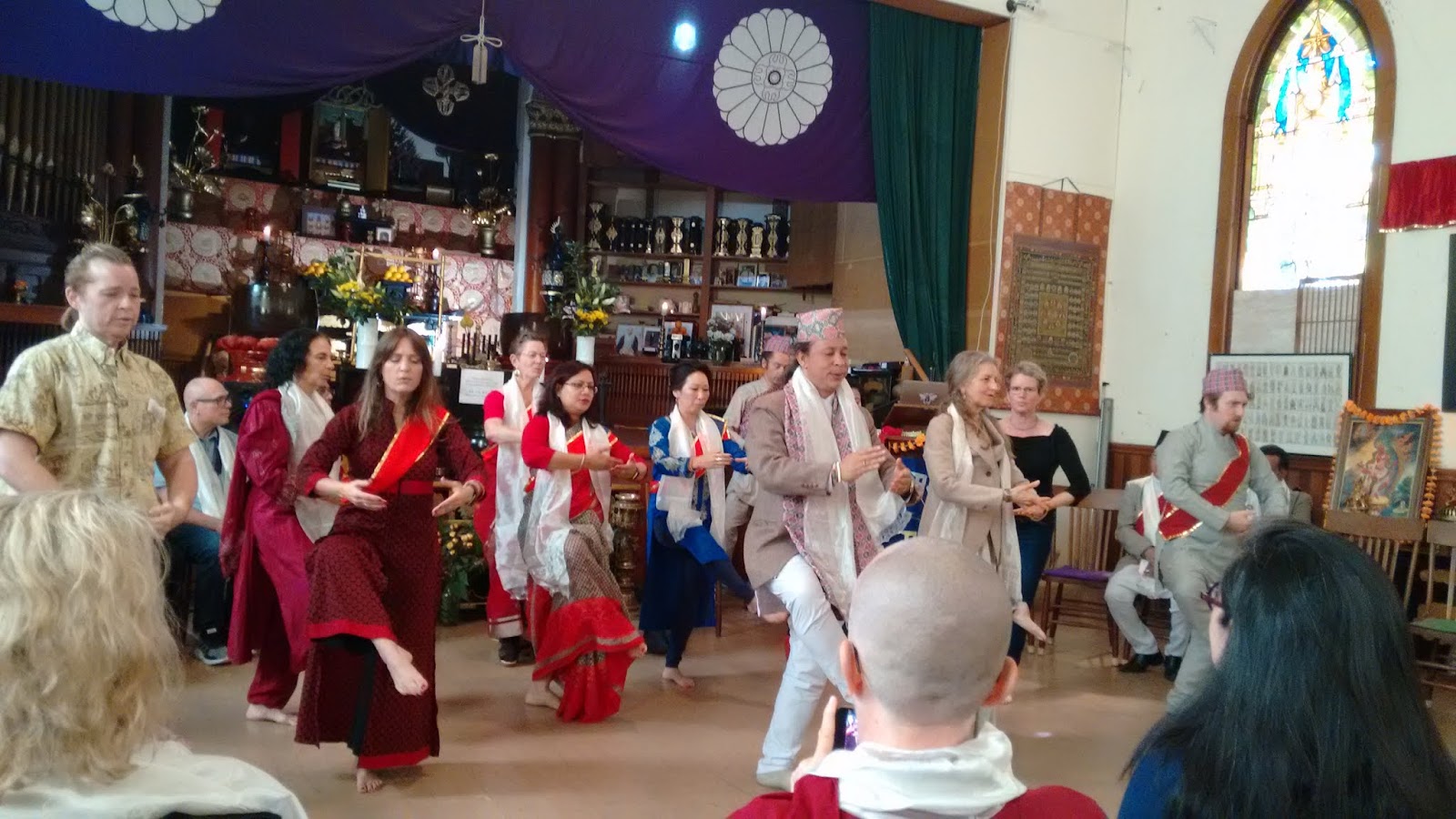
Portland, Oct 22 (Nepal Oregon News): A Dashain reception was organized by Nepali Association of Oregon (NAO) on Sunday, Oct 20, 2019 at Multnomah Arts Center in Portland.

The Dashain program started with playing of Nepal's national anthem on saxophone by Niraj Mali.

Addressing the gathering, vice president of NAO Pradeep Bajracharya threw light on NAO activities and said that NAO has been working together with other  Nepalese community organizations in Portland. (NAO president Bharat Banskota could not make it to the reception as he is in mourning  for his mom's passing away recently).

NAO has been celebrating Bijaya Dasami and Bikram Sambat new year and organizing  summer picnic on a regular basis for last several years, Bajracharya added.

On the occasion, NAO's secretary Pramod Poudel presented annual report while annual financial report was presented by treasurer Manish Karn.

A new executive committee of NAO was also announced on the occasion. Daya Shakya, Bishes Rayamajhi, Trilochan Paudel and Manish Karn are new president, vice president, secretary and treasurer whereas Alisha Mitchell, Dipak Poudel, Gyanu Ratna Maharjan, Keshav Dahal and Padam Jung Thapa are new executive members.

On the occasion, new NAO chief Daya Shakya and all other  newly elected office bearers of the NAO gave a brief introduction about themselves to the audience and expressed the confidence that they would be committed to the betterment of NAO and the Nepalese community in Oregon.

It is to be noted that NAO represents Nepalese population in Oregon and south west part of Washington.

According to NAO sources, the Nepalese community population in this part of the US is estimated to be about 1,000 - 1,200 people.

The Dashain event followed a cultural program in which popular Nepali singer from Sacramento, California Anish Okely and other local singers rendered melodious Nepali songs.

On the occasion, certificates of appreciation were presented to some Nepalese community members for their help and volunteering to NAO. Also, the NAO High School Excellence Award was given away to Bibhor Thapa.

Dashain program which was attended by almost 150 people was conducted by Mahendra Neupane.

Talking to the Nepal Oregon News (NON), the outgoing president of NAO Bharat Banskota said "I wish all the best to the new executive committee for its successful term to bring positive impacts to our NAO community and its friends in Oregon and beyond."

When Nepal Oregon News (NON) asked newly elected NAO president Daya Shakya about his vision, he expressed the confidence that he would try to take NAO to newer heights by carrying out different plans. "We will be working out and looking forward about what we can offer to make Visit Nepal Year 2020 successful",  he went on to add.


(Nepal Oregon News writer Rabin Man Shakya is one of the few  Nepalese journalists in USA)

Monday, October 21, 2019

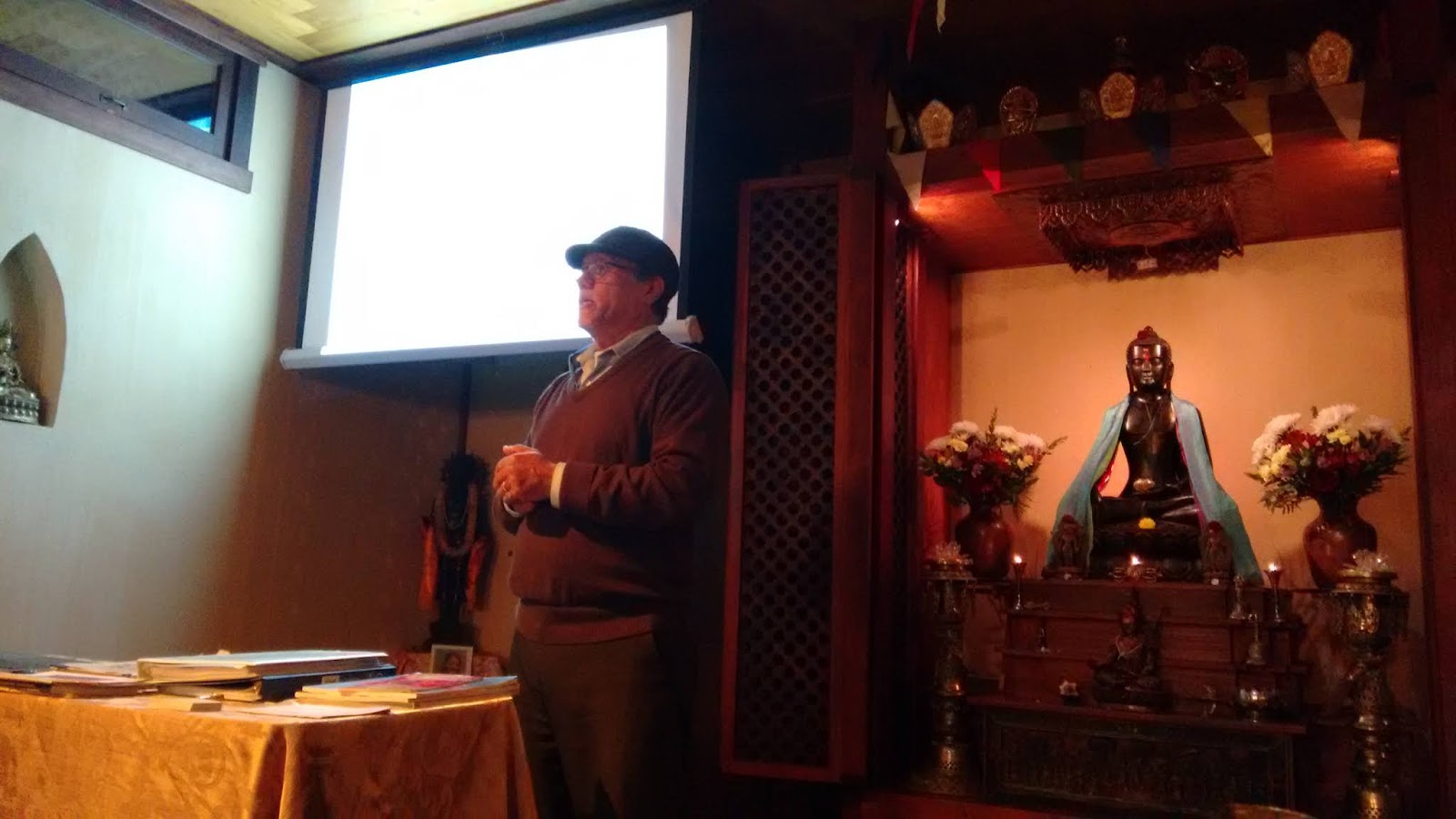
Talk on "Newah Tradition and Culture" Organized at Nepalese Buddhist Temple in Portland, USA

'Newahs Used to be Melting Pot of Nepal Valley'

Dr. Rabin Man Shakya


Portland, Oct 21, (Nepal Oregon News): A charismatic presentation on "Newah Tradition and Culture" by Daya Ratna Shakya was organized on Wednesday, Oct 16, 2019 at Nritya Mandala Mahavihara (NMA) in Portland as part of ongoing tenth anniversary of the NMA.

At the beginning of the program, priest Prajwal Vajracharya of the NMA presented a short introduction of presenter Shakya. Similarly, Vajracharya also performed Sankalpa Vaakya rituals at the program.

Speaking at the program, Daya Shakya underlined the need for preserving, promoting and protecting Newah culture and traditions.

Shakya said:"In ancient context, Newahs used to be melting pot of Nepal valley where people from different parts of the world moved in and then became Newahs."

Shakya expressed the view that Newahs in the USA have kept up praiseworthy and commendable tradition by celebrating a number of Newah days and festivals.

He then gave details about the activities of ancient Newah luminaries Jamana Guvaju, Surat Bajra and Bandhu Datta.

Shakya's presentation discussed the rich cultural heritage of Newah people of Nepal that fell in one of the highly recognized South Asian civilization in ancient Himalayan region, way long before the current Nepali culture was being discovered in modern Nepal.

The primary focus of the first half of Shakya's presentation was a discussion on power of ritual and its vocabulary that the Newah people use in daily life. .

Similarly, the second half of Shakya's presentation specifically focussed on the concept of understanding the works which have been done in past life and its current consequences as well as the way of tracing the future life, a unique technique that has to be discovered in maintaining the fruitful human life.

Daya Shakya - who is also the vice president of World Newah Organization, president of NRN-NCC-USA Oregon Chapter and president of Nepali Association of Oregon - also answered to different questions of the Nepalese and American guests at the program


(Rabin Man Shakya is a Nepali journalist in America) 

Wednesday, October 16, 2019

Ninth NRNA Global Meet: Sloganeering, Protests and Chaos

Rabin Man Shakya
Member, NRNA USA Oregon chapter

The ninth global convention of the Non-Resident Nepali Association (NRNA), which was inaugurated by Nepal's President Bidya Bhandari and which was participated by 2,500 representatives from 81 countries is bogged down in numerous controversies and scandals.

First came the news that said Upendra Mahato has boycotted the NRNA kumbha mela because of over politicization.

Kul Acharya (Britain) has been overtly and covertly supported by Nepali Congress, whereas Kumar Pant (Germany) is supported by the ruling Nepal Communist Party.

NRNA should not be a political platform and NRNs should not be contracted by viruses of political maneuvers and bickering.

The impartial and nonaligned NRNs still do not understand why NRNA movement has been bitterly polarized and overtly politicized ? Is it because of arrogant attitude of Nepal's political parties or because some NRNs are just "followers and tails" of the political parties ? Probably, little bit of both.

Also, there was a news in the media that outgoing president of NRNA Bhavan Bhatta was boarded out of a plane from an international flight because of unruly behavior in the plane owing to intoxication.

Meanwhile, the Nepalese NRNs from Australia were reported to have misbehaved the Nepalese airport officials at the Tribhuvan International Airport. Even the glasses in the immigration section were shattered by those NRNs.

Now the ongoing NRN election looks like a circus scenario where sloganeering, protests, chaos and verbal abuse of rival contestants are rampant.

Also, there is lack of unity and coordination in NRNA in major countries like the US, the UK, Australia, Germany etc. The NRNs keep washing dirty linen in public in these countries. This is bad omen for NRNA.

Monday, October 14, 2019

Ms Chandra Mali's Buri Janko Ceremony ( Bhimratharohan - Nepali style) Celebrated at Hillsboro, America

Dr Rabin Man Shakya


Portland, Oct 14 (Nepal Oregon News): A senior age  "Janko" religious ceremony or Bhimratharohan of Ms Chandra Lal Mali was held  at Raju and Minu Mali's residence at Hillsboro, Oregon on Friday, Oct 11, 2019.


Ms Chandra Lal Mali is the mother of Raju Mali and Ganga Sharma. Raju Mali is the founder president of Nepali Association of Oregon (NAO) whereas Ganga Sharma is also the former president of NAO.

Ms Mali's other children are Jamuna, Bernadine, Helen, Nancy and Urmila. Ms Mali also has over a dozen grand children plus some great grand children.

The whole Janko related ritual and puja were  performed for about five hours. Janko rituals of Ms Chandra Lal were performed by Buddhist Guruju Prajwal Ratna Bajracharya of the Nritya Mandala Mahavihara in Portland.

Janko related rituals like Gurumandala Puja, Homa Puja, Naag Puja, Kalash Puja and Bali Puja were ritualized by Prajwal Guruju. Prajwal Guruju went onto Samadhi to perform the Janko related rituals to bestow blessings to Ms Mali. Similarly, she was given a symbolic holy bathe to qualify her in divine life amid the presence of her family. Likewise, Baran Chhuyegu and Sagan Beegu rituals were also performed. Mangala Strota was also recited during the Sagan Beegu rituals.

Ms Chandra Lal was given a ride on a chariot drawn by flying horses, the magical steeds that would transport her to paradise or Nirvana, the afterlife destinations secured by the Bhimratha ceremony. Prajwal Guruju sealed the blessings to her by performing Homa Puja. During the Janko ceremony, Ms Chandra Mali was released from religious and ritual obligations, for her sins have been remitted and her Karma purified.

During the Janko ceremony, Ms Mali received respect "Tuti Bhagi Yayegu" from all members of her family. Present at the Janko ceremony were the office bearers and members of Nepali Association of Oregon, Nepaa Chhen and NRNA-NCC-USA Oregon Chapter.

One of the very important ritual part of the Janko ceremony is parading of the honored person around the vicinity of the neighborhood in a colorful procession accompanied by a  Newah style music team playing Dhime Baja. The Janko parade was accompanied by Guruju Prajwal, honoree's family members and a lot of Nepalese Portlanders and was feted with music, flowers, sacred water, vermillion powder and a lot of incense sticks.

So Ms Mali was once again treated like a bride and was pulled out on a chariot around the neighborhood. Janko ceremonies of senior Nepalese people were held in Portland in the past also. In one case, the honored Janko personality was driven in a vehicle-like chariot and in another case, the chariot was carried out on shoulders as per Lalitpur parampara.

This time, Ms Mali was on the small-four-wheel chariot just like in Kathmandu and was pulled away by her children and grand children.

Replying to a query of Nepal Oregon News, Buddhist Gubhaju Prajwal Bajracharya said:"When a man or a woman turns 77 years, 7 months, 7 days and 7 hours, there is a special ceremony to perform. The Bhimratha observance calls on the Goddess of long life - Usnisvijaya - to purefy Karma and bestow the blessings of good health and a long life span."

Similarly, asked by Nepal Oregon News about the importance of Janko ceremony, Nepali community leader in Portland Daya Shakya said:"A special ritual the Bhimratharohan (ascending a chariot of wellness 'bhim' and fearless) is organized to honor a person of the age 77 years, 7 months, 7days and 7 hours according to own faith either Hindu or Buddhist. A symbolic ritual of citation entering to higher level of human being and a qualified person to ride a spiritual vehicle of fearless divine personality is recognized."

A gala dinner party was organized on Saturday the next day at the Multnomah Arts Center in Portland  to celebrate Ms Chandra Mali's Bhimratharohan.


(Rabin Man Shakya is a Nepali journalist in USA)

Wednesday, October 9, 2019

Kuchhi Bhoye: What Exactly Does It Mean?

Dr. Rabin Man Shakya


Portland, Oct 20 (Nepal Oregon News): Kuchhi Bhoy - what exactly does it mean? My daughter asked me during Kuchhi Bhoye celebration at our home in Portland, USA during the Mohani Nakha festival recently.

About fifty years ago, in Nepal, when you go to buy rice, baji (beaten rice), gofuki, edible oil, lentils, beans etc, they were measured by Mana, Kuchhi and Paathi  by the store keeper. In Nepal Bhasa, it is Chhamana, Nimana, Swamana, Pyamana, Nyamana, Khumana, Nhayamana and Chyamana etc. Nimana is also Kuchhi in Nepal Bhasa.

Kuchhi or Nimana Baji (beaten rice) will be over five pounds which will be a lot for a person. So usually some cloths or papers are squeezed inside the Mana before serving Kuchhi Baji on the Lapte. Symbolically, Kuchhi Baji is eaten during that feast, so it is called Kuchhi Bhoy. Kuchhi Bhoy is usually the first traditional feast of the Newah people during the Mohani Nakha.


Traditionally, the Kuchhi Bhoy should be eaten on a big leaf of a banana tree. But if banana leaves are not enough, then a small piece of banana leaf is also put onto the Lapte alongside with the Baji. Putting a piece of a banana leaf into the Kuchhi Bhoy baji is sine quo non for the Kuchhi Bhoy feast. 

Kuchhi Bhoy is unique feast of the Newah people. Kuchhi Bhoy demonstrates the richness of the Newah culinary culture. More than twenty different cuisines are prepared for the Kuchhi Bhoy.

Meat items include: Chhoyala, Dayakaula, Kachila, Pukau, Takha, Sanya Khunya etc. Other items include: Fenugreek, Paunkwa, Bhuti, Butter Squash Pumpkin curry,  Simpu, Aalu Achar, Lain Achar, Cauli Flower curry, Lainkwa, Golveda Tofu curry, Tukancha Tarakari, Musya Palu etc. Also, Sisa Busa (fruits), boiled eggs and small fishes are also served during the Kuchhi Bhoy. Ayala (Newah home-made liquor) is also served from  the Anti. 


Kuchhi Bhoy is purely a family feast held on the Day of Astami, the eighth day of the fortnight as per Nepal Sambat calendar.

Newah Bhoy is always held in a spacious room. A long Suku (mat made of straws) is laid out and, on the day of Kuchhi Bhoy, all the members of the family sit cross-legged in a row for the Bhoy. 

In the Kuchhi Bhoy, like in all other important Bhoys of the Newah people,  the tradition requires that the eldest person in the family takes the place of honor at the top and the youngest at the bottom.

Alongside with the family members, the feasts are also offered to Choye Dyo (the upper god) which is ahead of the eldest person and Kwoye Dyo (the lower god) which is after the feast of the youngest in the family.

Mohani Sinha is also prepared on that day and before the start of Kuchhi Bhoy. The eldest in the family dabs the Black Mohani Sinha on the forehead of the family members.

Kuchhi Bhoy is an auspicious  and important day during the Mohani Nakha. It takes place on Kaula Thwo Astami. On this day, Newah people of the Kathmandu valley take a shower in the morning to purify themselves and put on fresh and washed clothes. Among the Newah Bajrayana families, the female members of the family go to worship Bhagwan Buddha and Ganesh at their neighborhood Mahaviharas and temples. Likewise, the same day, the female members go to worship different Peeths also.

Nala Swonegu, Pachi Marah,  Kuchhi Bhoy on Astami,  Syakko Tyakko on Nawami and Chalan on Dasami and Shree Gha Puni are important days for the Newah people in Kathmandu during the Mohani Nakha.

Well, Dashain and Mohani Nakha coincide on the same days, but Dashain and Mohani Nakha have similarities as well as dissimilarities. Dashain or Bijaya Dasami is celebrated by the Hindus of Nepal and India whereas Mohani Nakha is celebrated only by Newah people of Nepal, no matter they are Buddhists or Hindus.

The Newah people living in the United States of America also celebrate Kuchhi Bhoy and other Mohani Nakha related feasts, but it is not the same as in Nepal, because many things and ingredients required for the feast and festival are not available here.

It is to be noted that according to Hindu mythology, Mahishasur daitya was killed by Durga Bhavani on the day of Bijaya dasami, but Newah people believe that a Daitya called Bhasmasur was killed by the Goddesses on the same day.

Also, Newah Theravada Buddhists celebrate it as the Day of Dhamma Vijaya to commemorate the day on which Emperor Ashoka abandoned violence and started to adopt a policy of peaceful co-existence.


(Rabin Man Shakya is a Nepali journalist in USA)

Sunday, September 29, 2019

Buddhist Iconographies of Nepal and Tibet Show Many Interesting Differences: Dr Vajracharya


Dr. Rabin Man Shakya


Portland, Sept 29, (Nepal Oregon News): A scholarly talk on "Nepalese Buddhist Art and Iconography: What Makes It Distinct ?" by Dr Gautama Vajracharya and a presentation on "Making Nepalese Buddhist Ritual Masks" by Alysha Graham, an artist,  were organized at Nritya Mandala Mahavihara (NMM) in Portland on Saturday, Sept 28, 2019 as part of the NMM's ongoing tenth anniversary programs.

Prajwal Vajracharya, a priest and co-founder of Nritya Mandala Mahavihara, on the occasion gave a short introduction of Dr Vajracharya before the start of the talk.

Although based on the same well-known Sanskrit texts Sadhanamala and Nispannayogavali, the Buddhist iconographies of Nepal and Tibet show many interesting differences, Dr Vajracharya said at the program.


Dr Vajracharya, during the scholarly talk, shared and explained these differences in light of his observations of Buddhist civilization and Himalayan geography and climate.

One of the most interesting differences between the iconographies of Nepalese Paubhas and Tibetan Thangkas  is:  More than 75 percent of Nepalese Paubhas depict Toranas whereas Torana is mostly missing in Tibetan  Thangkas, said Dr Vajracharya.

( Torana is a free-standing ornamental or arched gateway for ceremonial purposes seen in the Buddhist and Hindu arts and architecture of Nepal, India and other South Asian nations.)

Replying to a query of Nepal Oregon News about the study of Nepalese Buddhist art and iconography outside of Nepal, Dr Vajracharya informed that the research and study of Nepalese Buddhist art and iconography started in a French University during King Mahendra's rule. Nepalese Buddhist art and iconography are studied in the US, Britain, Germany and some other European countries, he added.

Vajracharya, who was born into a Newah Gubhaju family in Kathmandu in 1940, learnt Sanskrit from Nayaraj Pant and he was also taught to read ancient inscriptions and iconography.

Dr Vajracharya taught History of South Asian Art for 23 years at the University of Wisconsin-Madison and is a Professor Emeritus in the Department of Art History.

Dr Vajracharya, who is a renowned Nepali Sanskritist and art history scholar, is the author of books : (1) Nepalese Seasons: Rain and Rirual (2) Frog Hymns and Rain Babies: Monsoon Culture and Art of Ancient South Asia (3) Himalayas: An Aesthetic Adventure.

Likewise, making a presentation on "Making Nepalese Buddhist Ritual Masks", Alysha Graham, an artist, presented the process of creating masks for Charya Nritya, dance as a spiritual practice. At the program, Helen Appel, co-founder of the Mahavihara gave a brief introduction about Alysha before her presentation.


I grew up in a Gurdjieff community in rural Aurora, Oregon. I am an artist. At age 20, I sat my first 10 day Vipassana retreat taught by S N Goenka. I consider Vipassana to be my root practice and have completed and served 5 ten day courses, Alysha said during the presentation.

At age 25, I found the practice of Charya Buddhist Nepalese deity dance. I also studied the Green Tara and White Tara long forms in Charya through a grant that also included studying traditional Buddhist deity mask making and Thangka painting, Alysha went on saying.

Answering a question of Nepal Oregon News, Alysha said that her inspiration to become an artist came from years of relating closely with nature, her passion for indigenous wisdom, Buddhist philosophy, yoga, health and plant spirit medicine.

Alisha Graham is an artist, Charya dancer and Vajrayana practitioner and recipient of a grant to study traditional Nepalese Buddhist mask making and Paubha painting.

Both Dr Vajracharya and Graham replied to numerous questions asked by Nepalese and American participants at the program. The program which was attended by over 50 American and Nepalese participants was followed by a Nepali style dinner.


(Nepal Oregon News writer Rabin Man Shakya is a Nepali journalist in America)

Monday, September 23, 2019

Newar Buddhist Temple - Nritya Mandala Mahavihara's - Tenth Anniversary in Portland, America: Time for Retrospection

Dr Rabin Man Shakya


Portland, Sept 23 (Nepal Oregon News): Despite the fact that Shakya Muni Siddhartha Gautam Buddha was born in Nepal, Nepal used to be called a Hindu kingdom until recently. Nepal still is a Hindu majority country. At a time when Buddhists of Japan, Korea, Tibet, Taiwan, Burma, Sri Lanka, Thailand, Laos, Cambodia, Vietnam and so on are working very hard to disseminate the ideas of Buddhism throughout the world, the role of Nepalese Buddhists in propagating and enriching Buddhism abroad is insignificant.

The role and scope of Nritya Mandala Mahavihara (NMM) in Portland, USA which is celebrating its tenth anniversary has to be analyzed against such disappointing background.

The Nritya Mandala Mahavihara - which is the only Nepalese Buddhist temple in the West so far - has moved to centerstage in Nepalese community in Oregon by observing the age-old festivals of the Kathmandu valley and by keeping alive the traditions and culture of the people of Nepal.

The tenth anniversary of Nritya Mandala Mahavihara is being celebrated in a grand manner throughout September to November. An opening celebration which consisted of various programs was organized at Henjyoji Shingon Temple in Portland on Saturday and Sunday Sept 21-22, 2019.

At the beginning of the program, various dignitaries of Portland's Dharma communities and some prominent Nepalese Portlanders were felicitated by wrapping Khata on them. The tenth anniversary program was declared open by co-founder of the Mahavihara Helen Appell by lightening diyo on the twarba. 

The anniversary program started with opening chants and prayers by various luminaries of Portland's Dharma communities for an auspicious beginning. An art exhibition and cultural display was also organized on the occasion.

In his welcome remarks, Rev. Kosho Finch of the Henjyoji Shingon Temple said that the objective of the Buddhist Henjyoji Temple is to provide support to all congregrants  in achieving their desired personal and spiritual potential through Shingon Buddhism.

"The Japanese Cultural Academy fosters the study and practice of traditional and evolving Japanese arts," he said.

Speaking on the occasion, Prajwal Vajracharya, priest and co-founder of the NMM said that Dance Mandala was launched in 1996 whereas Nritya Mandala was established in 2009 by Helen Appell and him.. Prajwal threw light on the history of the Mahavihara, the challenges and problems he faced in the beginning.

Nritya Mandala Mahavihara has been working to disseminate values of Newah Buddhism in the West. Similarly, various rituals like rice feeding ceremony, wedding ceremony, Bratbandha, Ihi and Bhimrathrohan rituals are also organized in the Mahavihara, Prajwal said.

The Newah Buddhist temple's ten year history with a slide show of the process and events of bringing Nepalese Buddhism to the West through NMM was able to vividly shed light on the activities of the Mahavihara.

The program was also addressed by Bharat Banskota, president of Nepali Association of Oregon and Daya Shakya, vice president of World Newah Organization and president of NRN NCC USA  Oregon chapter.

One of the attractions of the day's programs was a talk " Nepalese Food Wisdom: Food as Medicine" by Bikram Vaidya. It was a slide-talk journey through the many regions of Nepal's culinary flavors, seasonal foods and their health benefits, culminating in the Kathmandu valley's indigenous foods.

Nepalese wisdom of balancing the five elements through nutrition is shared along with the traditional foods for different festivals of the Valley.

Chef Vaidya was born in the Kathmandu Valley in a lineage of Ayurvedic practitioners. He currently is Lead Chef Instructor at Oregon Culinary Institute in Portland.

Another equally important attraction of the celebration was Nepalese music performance and talk by Dr Subhash Prajapati. Dr Prajapati and his team performed both traditional and folk music from different ethnic groups of Nepal and also featured Newah Buddhist music "Gunla Bajan" of the Kathmandu valley using traditional drums like Dhaa, Nayekhin, Dhimey and Paschima.

Different programs were organized on Sunday, Sept 22 also. "Mudra Movement Workshop" by Prajwal Vajracharya was health through movement with intention, gestures and knowledge of the inner meanings of parts of the body and their five elements, the subtle body can come into balance.

Prajwal in a charismatic way discussed how certain movements and mudras effect health and shared simple yogic exercises for healing for hands, feet and energy channels, as well as the refuge dance for intention.

Prajwal Vajracharya was born into a lineage of Buddhist priests of the Kathmandu valley and was raised in the yogic and ritual art of Charya dance.

A workshop "Making Ritual Objects" by Uppa Shakya, Dina Shakya and Anjali Bajracharya was also organized. The workshop attempted to cultivate a meditative mind and dexterity and health in the hands through the practice of making Nepalese Buddhist ritual objects like Goza, Jajanka and Ita.

Similarly, Dr Subhash Prajapati conducted another workshop on "Sanskrit Scripts and Calligraphy" which explored and practiced sacred Sanskrit writing forms including Ranjana Lipi script developed around 11th century in Nepal.

At the end of the program on both days, the traditional sacred Buddhist dances of Nepal - Charya Nritya - a sadhana (meditation practice) through the embodiment of peaceful, semi-wrathful and wrathful deities, five Buddha energies, offering goddesses and couple dances were also presented before the audience.

The 10th anniversary organized by Nritya Mandala Mahavihara was attended by over 100 participants including luminaries of Portland's local Dharma communities, American and Nepalese Buddhists, office bearers and members of Nepali Association of Oregon, Nepaa Chhen and NRN NCC USA Oregon chapter and a representative from Nepal Oregon News.

Glimpses of the program. Sorry could not make it to all the events.


(Rabin Man Shakya is a Nepali journalist in USA)


Mobile Passport and Consular Service Camp Held in Hillsboro and Cornelius, OR for Nepalese living in NW America

120 Nepalese from Oregon, Washington and Idaho Benefit from the Mobile Passport Service Camp Rabin Man Shakya (Photos by: Rabin Man Shakya) ...