Tuesday, May 14, 2019

Slideshow about Nepal Visit Organized at Nritya Mandala Mahavihara at Portland in USA

Dr Rabin Man Shakya


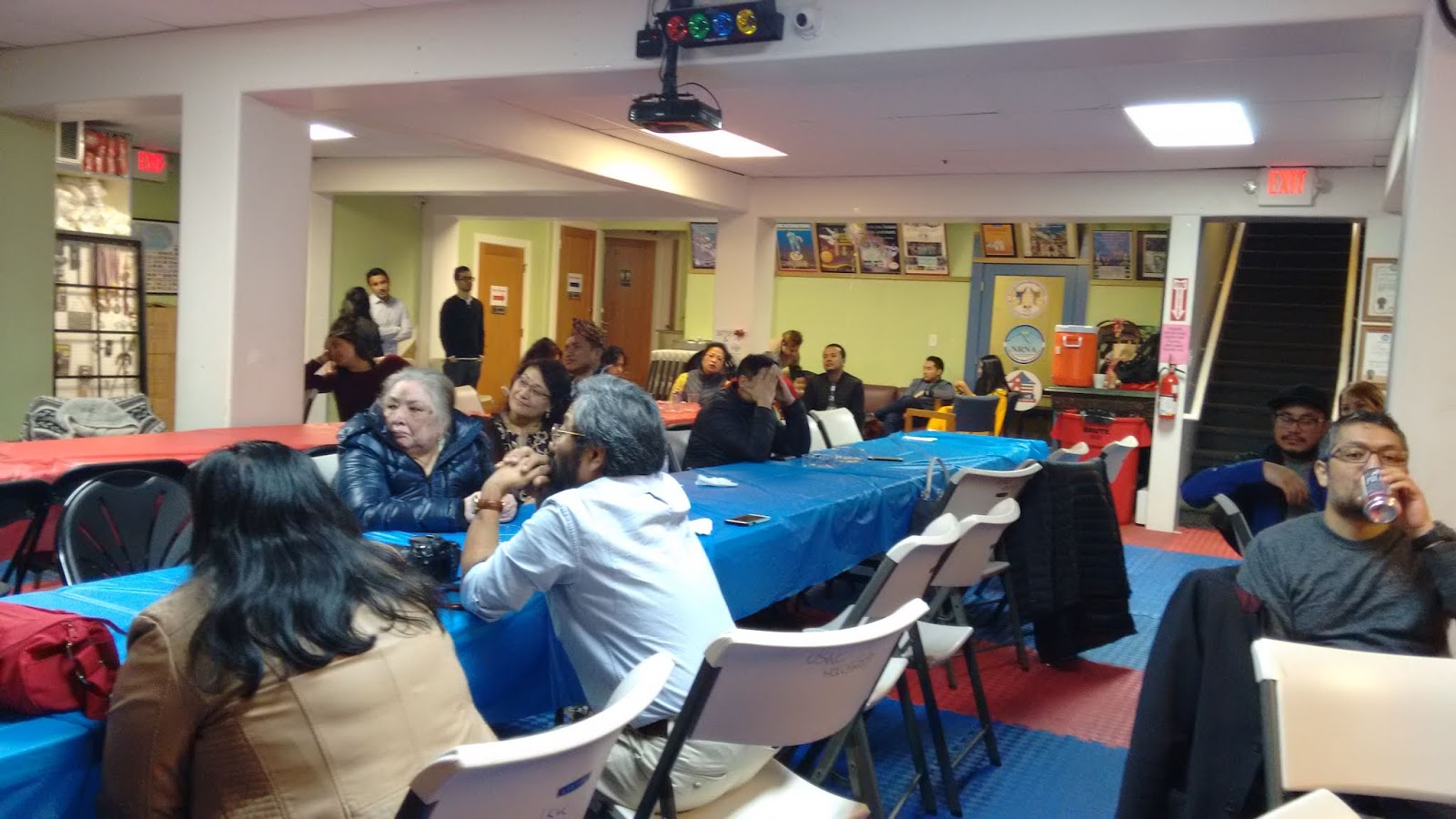
Portland, Nov 12 (Nepal Oregon News): A slideshow presentation about experience of visit to the Kathmandu valley, Pokhara and Tansen was organized at the Nritya Mandala Mahavihara in Portland on Saturday  May 11, 2019.


Jeanean Rauch and her 12 year old son Andrew traveled and worked in Nepal for ten weeks. Ms Rauch shared pictures and stories from the trip. They lived at the Kevin Rohan Memorial Eco-Foundation which is an NGO in the kathmandu valley.


The Foundation was established in 2008 in Khahare, a village near Kathmandu. After the accidental death of their seven-year old son, Krishna and Leela Gurung decided to establish a foundation to remember him and to develop a project to make a better world that they would have liked Kevin to live in.

The Foundation has a health clinic,  a Waldrof-inspired  school, biodynamic workshop, sustainable carpentry workshop, and are building bottle houses for sustainable housing solutions.

The mom and her son were in Nepal during the Nepalese festival of Tihar and American holiday of Thanksgiving Day.

The slideshow presentation was a nostalgic deja vu for some Nepalese Portlanders, and lots of interesting and esoteric information about Nepal for American guests.

The mom and her son witnessed Kag Puja, Kukur Puja and Govardhan Puja in the Kathmandu valley. There were pictures and stories about a rice feeding ceremony for a newly born child. Also, they celebrated the Thanksgiving holiday with a Nepali family.

The slideshow offered a wide spectrum in terms of Nepalese lifestyle, Nepalese festivals, ceremonies and rituals, the Himalayas, trips to religious and historical places like Boudha Nath, Monkey Temple and Lumbini, the birthplace of Lord Buddha.

And it looked like they loved Daal Bhat Tarkari, Momo dumplings and other Nepalese delicacies. 

Answering to a query of this scribe, Jeanean said she liked the Nepalese cuisines, Nepalese hospitality, helpfulness of the people, their generosity and spiritualism. But she also added that she did not like the deteriorating pollution, crowdy and noisy bus rides and dirty rest rooms.


Many American guests who were present at the program have been to Nepal. The good thing about the program is that the slideshow impressed upon a kind of interest and curiosity about Nepal on those who have not yet been to Nepal.


The slideshow presentation was followed by a delicious potluck dinner.


(Rabin Man Shakya is a Nepali journalist in America)

Wednesday, May 1, 2019

Talk on Traditional Newah Music by a Nepali Music Expert Held at Nritya Mandala Mahavihara in Portland, America

Dr Rabin Man Shakya


Portland, April 28, (Nepal Oregon News): The history of Newah music dates back to 6th century which is mentioned in a Shilalekh  (historical inscription) "Baditra Gosthi" or Baja Guthi found at Lele, Patan in Nepal.Dr Subhash Ram Prajapati, a music expert and a musician himself, said this at  a program  organized at the Nritya Mandala Mahavihara in Portland, USA on Saturday April 27, 2019.

Newah traditional music is an integral component of broader South Asian musical history, Prajapati added.

The talk also examined the historical narratives, cultural traditions and recent changes in traditional music from Nepal.

During his presentation, Prajapati focused on the ancient and mediaeval music of Nepal, its history and culture.

Gunla Bajan, for example, is a tradition which is as old as almost 800 years from today, Prajapati said, referring to "Gunila" mentioned in Gopal Rajvanshavali.

Prajapati also answered to the questions of the guests during the program.

At the end of the talk, Prajapati gave a performance on various drums of the Nepalese traditions accompanied by fellow musicians.

Prajapati gave live rendition on Newah drums like Dhimay, Dhaa, Paschima and also Madal. Other musical instruments like Taa (a Newah cymbal) and Naykhin were also played.

However, it was musician David Suhay who stole the show by playing "Woh Chhu Galli, Thwo Chhu Galli" and "Resham  Phiriri" on the violin.

About 60 Newah Portlanders and local Americans were present at the program which was followed by a sumptuous potluck dinner.

Prajapati has recently completed his Ph D in Ethnomusicology from the University of Washington.

His research focuses on traditional, folk and fusion music from Newah communities on a global perspective of musical changes.


(Rabin Man Shakya is a Nepali journalist in USA)

Tuesday, April 23, 2019

Khin (Newah Drum) Playing by a Nepali Musician Organized at Portland in USA

Dr Rabin Man Shakya


In terms of economic development, Nepal may be an LDC or a least developed country, but the tiny Himalayan nation is rich in arts, traditions, culture and mediaeval architecture, and more so in traditional music and musical instruments.

In the past, hundreds of musical instruments were in vogue in Nepal. Those musical instruments which were the integral part of the Newah life were used and practiced during different festivals and rituals. According to a research, there were about 200 original instruments used and practiced in Nepal in the past and only 108 of them are still in use. It is so painful to note that many of the musical instruments have already disappeared owing to the neglect of the state. 

Nevertheless, the fact that Newah culture is rich in traditional music is proved by use of numerous musical instruments, such as, Payntah (a long trumpet), Dhimay (a huge double sided drum), Dhaa (a double sided drum), Khin (also a double sided drum), Taa (a small cymbal), Bhusya (a large cymbal) and the list goes on.

Meanwhile, a Khin (double sided drum) presentation was organized at the Nritya Mandala Mahavihara in Portland on Saturday April 20, 2019. The Khin was played by artist Amir Raj Maharjan who is currently on a visit to the United States. About 50 Newah Portlanders and local Americans were present at the program.


Prajwal Bajracharya of the Nritya Mandala Mahavihara expressed the view that Newah Portlanders could take advantage by learning about Khin and listening to it.


Speaking on the occasion, musician Maharjan said that a Khin is a classical membranophone widely and popularly played during the Bhajans and different festivals. Giving a brief introduction of Khin, Maharjan said that a Khin is made of a wooden trunk with thin animal skins covering both sides.

In his words, the right side of the Khin is covered with cow skin and left side with goat skin, having a black tuning paste called Khau attached in both sides. On the occasion, Maharjan also presented a popular Newah folk song "Rajamati". No doubt, the traditional popular folk song like "Rajamati" is a part of rich Newah cultural heritage.

Quintessentially, the Newahs have a huge legacy and heritage of traditional and classical music and dances. The music and musical instruments of any ethnic community are reflected in the way of living and lifestyle of the particular ethnic community. Rich Newah music and musical instruments are testimony to the magnificent Newah culture.


(Rabin Man Shakya is a Nepali journalist in America)


Sunday, March 31, 2019

Newar Buddhist Temple 'Nritya Mandala Mahavihara' Celebrates World Newah Day in Portland, USA


Prajwal Vajracharya Underscores Need for Preservation of Newar Buddhism, Newar Culture


Dr Rabin Man Shakya


Portland, March 31 (Nepal Oregon News): At a time when Newah culture, Nepal Bhasa  and Newah people are being constantly undermined and encroached by the state, the bold decision of the World Newah Organization in July 2017 to observe the last Saturday of the month of March as the World Newah Day is very commendable and praiseworthy.

World Newah Day is an opportunity for the Newah people across the world to renew our commitment for Newah cause in challenging times. Celebration of World Newah Day is a solemn occasion for the Newahs to raise the value of Newah identity.

World Newah Day should be celebrated to remind our government to respect the Newah value and culture and declare Nepal Sambat the national calendar of Nepal. A Newah may be a Buddhist or a Hindu, a Newah may be an Aryan or of a Mongoloid origin but a Newah ultimately is a Newah with Newah values and traditions. Needless to say, "Jhi Newah - Newah He Jui."

Newah culture and Newah traditions are major sources of cultural identity of Nepal.  Culture, rituals and religions are the integral part of our national life. Culture and traditions are like the mirrors which catch the glimpses of the whole nation.

Therefore, despite facing  threats and encroachment from various state and non-state sources, the Newah people should continue  to raise the voice against injustice meted out on them and also to work unitedly to preserve and protect the Newah identity.

Newah civilization is very ancient. In economic terms, Nepal may be a poverty-stricken country, but in the front of arts, culture, rituals and traditions, there are reasons for Nepal to be proud of her cultural heritage, ancient arts and architecture. Lured by the natural beauty and cultural richness of the Himalayan nation, millions of tourists have visited Nepal.

According to Nepal's population census of 2068 BS, demographic representation of the Newah people is only five percent.The same census says that only 3.2 percent of the population speak in Nepal Bhasa as the mother tongue.

If these numbers are true, which I think they are not, it is a wake-up call for the Newahs in Nepal and across the world. Equally alarming is the percentage of Buddhists at  9 percent in the national census in a a country where Lord Buddha, an apostle of world peace, was born.

Meanwhile, a program was organized by Nritya Mandala Mahavihara to celebrate World Newah Day in Portland, USA on Saturday March 30, 2019.

A one-minute silence was observed at the beginning of the program in memory of late Marcus Thomas who passed away last month in Mexico.The Bhimratharohan of Mr Marcus Thomas and Mrs Betty Durham was performed at Nritya Mandala Mahavihara on June 25, 2018 as per the Bajrayana Newah Buddhist rituals.

Speaking on the occasion, Prajwal Ratna Vajracharya of the Nritya Mandala Mahavihara underlined the need for preservation of Newar Buddhism and Newar culture which are the important ingredients of socio-religious and cultural identity of Nepal.

The fact that Nepalese and foreign scholars have carried out research and Ph Ds on a lot of Newar rituals like Ihi, Chudakarma and Junko etc also reflect the richness of Newar culture and traditions, Prajwal went on adding:"The Mahavihara plans to invite scholars from different countries to participate at the Mahavihara's forthcoming tenth anniversary programs."

Vajracharya also informed the gathering that funds are available at the Mahavihara for conducting research works on Newar rituals and festivals. Guruju Prajwal Vajracharya also answered the questions of the audience and listened to their suggestions. Prajwal extended World Newah Day greetings and wished Newah Portlanders peaceful skies, strong health and success.

Also speaking on the occasion was Anastasia Roderick who threw light on the contributions of Nisthananda Bajracharya and Yogbir Singh Kansakar to the development of Nepal Bhasa literature. Likewise, community member Sharmista Amatya spoke about the rich cultural heritage of Nepal.

About 50 Newah Portlanders including some Americans attended the program which was followed by a potluck dinner. Present  on the occasion were the Sangha members of the Nritya Mandala Mahavihara (both Americans and Nepalese), activists of Nepali Association of Oregon (NAO), Nepaa Chhen, a non-profit organization of the Nepalese community in Oregon, leaders of Non-resident Nepalese Association, USA Oregon Chapter and representative from Nepal Oregon News, USA.


Mahavihara's Prajwal Vajracharya speaking at the World Newah Day program.


Anastasia Roderick speaking on the occasion of World Newah Day program in Portland.


(Also, please read a relevant article: "World Newah Organization - WNO - and the issues of Newah unity" published in the Nepal Oregon News on Dec 25, 2024)

Sunday, March 24, 2019

Falgun Purnima Observed in Portland by Reciting Naamsangiti in Zoom

Dr Rabin Man Shakya


Portland, March 29 (Nepal Oregon News): Nritya Mandala Mahavihara of Portland, USA observed the Falgun Purnima on Sunday, March 28, 2021 by reciting Mahamanjushree Naam Sangiti on the zoom.

Each Purnima is sacred and holy for the Buddhists. Although the Holi festival on the day of Purnima is basically a Hindu tradition, the other two events: Chakan Dyo Jatra and Gurumapa Yat Ja Nakegu events also coincide on the Day of Falgun Purnima. Chakan Dyo and Gurumapa events are related to Newah Vajrayana Buddhism.

Holi festival, the festival of colors, is being celebrated in Nepal enthusiastically and with much  fanfare. The festival of colors also heralds the arrival of spring. It is a festival of victory of truth over falsehood, victory of justice  over injustice.

In Nepal, Holi is celebrated for eight days from Falgun Shukla Astami to Falgun Shukla Purnima.


As a matter of fact, Holi festival kicks off in Kathmandu only after colorful Chir is erected at an auspicious time on Falgun Shukla Astami at Basantapur Durbar Square.

The Chir is made up of about 30 feet long bamboo. The umbrella-like Chir having cloths of different colors in four directions on the top is erected on the day of Falgun Shukla Astami at Basantapur.

The soldiers of "Guruju Ya Paltan" an olden army unit of Nepal stand guard during the hoisting ceremony of "Chir". Guruju Ya Paltan also fire gun salutes to mark the occasion.

The responsibility of erecting the Chir on Falgun Shukla Astami and cremating the Chir on Falgun Shukla Purnima is bestowed to a Manandhar community of Tanlachhen Dhalsiko from Kathmandu.

Well, Holi is celebrated by the Indian community all over the USA. Last year in 2018 even the Nepalese living in Dallas, Texas celebrated the festival of colors enthusiastically.

Nevertheless, this festival  of colors is still not celebrated here in Portland amongst the Newahs like the way we did in Kathmandu.

That is why I am looking back nostalgically to my childhood time at my birth place - Naghal Tole in Kathmandu -  when we used to throw balloons full of water and squirt water on the friends.

Right now, while I am wishing all of you - Happy Holi festival, I am listening to evergreen Nepal Bhasa song in YouTube

"Holi Ya Mela Mayaju Mashyula
Abir Bhachasa Chhyanay Tayahu"

Meanwhile, social media sites like Facebook and Twitter are abuzz with the Holi festival greetings and Holi related pictures. Going by the social media sites like Facebook, revelers celebrated the festival by smearing Abir on each other's face and throwing water filled balloons.

According to Hindu mythology, celebration of Holi is related to the episodes of Lord Krishna's romances with the Gopinis in Brindavan, India and also related to the legends of demon king Hiranyakashipu, his sister Holika and his son Pralhad.

Demon king Hiranyakashipu was very angered by his son Pralhad's devotion to Lord Vishnu. Hiranyakashipu ordered fire-resistant Holika to run into pyre together with Pralhad in a sinister design to kill Pralhad. But because of devotion to Vishnu, Pralhad was miraculously saved and demoness Holika died. 

Also, celebration of Chakan Dyo jatra coincides with the Holi carnival. One of the popular legends has it that a trader named Singha Sartha Bahu from Tham Bahi (Thamel), Kathmandu along with 700 other merchants had gone to Lhasa, Tibet for carrying out business activities there.

Upon completion of the business, they prayed to Godess Karunamaya for safely returning to Kathmandu. Karunamaya told them that a white unicorn will be waiting by the Brahmaputra river. "Sit on it and do not look back for if you do, the female demons will eat you up."

When they were returning to Kathmandu, they had to cross the Brahmaputra river. Female demons disguised as beautiful nymphs enchanted them asked to look back. All of them except Singha Sartha Bahu looked back and were eaten by the female demons.

The Chakan Dyo jatra is celebrated along side with Holi to commemorate the safe arrival of Singha Sartha Bahu from Tibet. Singha Sartha Bahu symbolizes the Chakan Dyo.

The Chakan Dyo jatra is meant for two days. On day one, the Chakan Dyo is displayed for public view at Bhagwan Bahal, Thamel. On day two, the Chakan Dyo is taken around the ancient neighborhood periphery of Thamel.

By the way, Singha Sartha Bahu was the brother-in-law of Kesh Chandra who built Itumbaha Mahavihara in Kathmandu.

On the day of Falgun Purnima, the Chir is broken down and taken away to Tundikhel for burning. According to another legend, after the burning of Chir, one Muri of cooked rice is offered to Gurumapa, a ferocious demon who used to abduct children of Kathmandu and ate them.

With order of Itumbahal's Kesh Chandra, Gurumapa was held up and was ordered to stay at Tundikhel for good. In turn, Gurumapa will be offered once every year on the day of Falgun Purnima a huge feast  consisting of one Muri cooked rice, cooked meat out of a whole buffalo, Ayla (traditional liquor) and Thwon (traditional white beer). This tradition is still alive and there is a provision of Guthi for this purpose.

Speaking about Holi's pros and cons, this festival plays vital role to promote goodwill among the Nepalese people. Holi is a celebration of fertility, joy, color, love and friendship. Actually, The festival provides an occasion for merry-making. Nepal's festivals have been enhancing goodwill in a diverse  society of Nepal by contributing to increasing social unity.


But at the same time, increasing incidents of hooliganism during the Holi festival are on the rise. Strict law enforcement is important to curb the growing arbitrary attitude of the youth during the Holi.

Every year police detain hundreds of young people for hooliganism as part of the drive to control arbitrary acts during the festival of Holi. Likewise, hundreds of motorbikes are taken into police control in the Kathmandu valley as youths drive into the streets defying laws during the Holi festival.


(Rabin Man Shakya is a Nepali journalist in the USA)


Monday, March 11, 2019

Sila Charhe is Shivaratri for Newahs

Rabin Man Shakya
Portland, USA.

Newah people in Kathmandu valley celebrate Shivaratri as Sila Charhe. In other words, Sila Charhe is the Shivaratri in Nepal Bhasa. And Shivaratri literally means the night of Shiva.

Taking a trip down memory lane, I remember on the night of Sila Charhe, we the children of the chowk at Naghal Tole, Kathmandu used to organize bonfire at night at the chowk on the day of Sila Charhe. The lady family head of each household in the neighborhood used to bring kani-musya and other nuts for everybody.

Earlier in the day time, we, the kids of the chowk at Naghal Tole used to go to nearby neighbothood homes to take jagat by collecting woods for Sila Chahre bonfire. We used to sing:

Maadyo ya chikul
Ganedyo ya ikula
Si nikha ti ti

This tradition of collecting woods and arranging bonfire is already on the verge of extinction. Today's Internet crazy urban kids of Kathmandu probably do not know anything about those things.

The word Silacharhe has its own meaning in Nepal Bhasa. Si stands for Shiva, la stands for month and charhe for Chaturdarshi and hence Silachahre.

Hindu Newahs celebrate Silacharhe on the day of Sillagaa Charhe. Sila Charhe is a Hindu festival celebrated every year in reverence of Hindu God: Shiva. Winter is over and Spring is on by the time of Silacharhe. So burning woods for getting heat is the last one in the year.

On the day of Silacharhe, Hindu devotees from across Nepal and other countries like India, Malaysia, Singapore and Mauritius visit Pashupatinath temple in Kathmandu to offer the prayers to Lord Shiva.

According to Hindu mythology, Lord Shiva was born on this day. Similarly, legend has it that Shiva and Sati Devi were married on this day.

Also, in pre-historic times, poison came out of the ocean during Samundra Manthan. Lord Shiva gulped the poison brought about by the Samundra Manthan and beheld it in his neck which bruised and turned it blue. That is why Shiva was called Nil Kantha after that.


(Rabin Man Shakya is a well-known Nepali journalist in USA)

Sunday, March 10, 2019

Non-resident Nepali Association (NRNA) USA Oregon Chapter Observes International Women's Day (IWD) in Portland, America

We Should Work for Empowering Nepal's Rural Women: Blackledge

Dr. Rabin Man Shakya


Portland, March 10 (Nepal Oregon News): This year's International Women's Day was celebrated with much fanfare across the world with the UN's slogan "Think Equal, Build Smart, Innovate of Change." Likewise, a program was organized on Saturday March 9, 2019 at Nekusing Memorial Theater, West Coast Hollywood Taekondo, Portland, by Non-resident Nepalese Association - National Coordination Committee - USA Oregon Chapter to mark the International Women's Day (IWD).

Speaking on the occasion, Diwakar Maharjan, a renowned taekwondo guru and president of NRNA-NCC-USA Oregon chapter, underlined the need to end the tendency of underestimating the women.

Also speaking on the occasion was Nripendra Dhakal who expressed satisfaction on the adequate proportional representation of women office-bearers in the NRNA-NCC-USA and its state chapters.

Lisha Shrestha, a Ph D student at Portland State University remarked: "Despite the rhetoric for equal access to opportunities and gender equality,  still a lot needs to be done for real women empowerment."

Immediate Past President of Nepali Association of Oregon (NAO) Ms Ganga Sharma stressed the need for gender equality in practice.

Manju Thapa Magar, councillor at the Emmanual  Medical Center, Portland emphasized the need for equal access to education, jobs and other opportunities.

President of Nepali Association of Oregon (NAO) Bharat Banskota said  that the organizing of such programs is very important and relevant. Baskota also dwelt on the history of women's struggle of gender equality.

Addressing the gathering, IOFTC general secretary Karen Blackledge who has visited Nepal several times said that we should work for empowering Nepal's rural women.

Daya Shakya, vice president of NRNA Oregon Chapter shed light on the importance of IWD and about the Oregon Chapter's activities at the program which was attended by about 75 Nepalese people living in Portland and its periphery.

Representatives of Nepali Association of Oregon (NAO), Nepa Chhen,  Nritya Mandala Mahavihara and Nepal Oregon News were also present at the program. The program was conducted by Ms Alex Minu Maharjan of the Hollywood Taekwondo School. The program was followed by a potluck dinner and a live dance program.

On the occasion, different poems were recited by Nepali poetesses of Portland. A poem on "Why I like IWD" was presented by poetess Kusumabati Bajracharya while a poem on "Remembering motherland Nepal" was rendered by poetess Anjali Bajracharya. Poetess Naveena Shakya recited a poem on "Mother's love" which had an overwhelming emotional impact on the audience.

To wrap it up, the views of the speakers and those of the poetesses echoed the right voice and priorities that must be accorded to for the gender equality, equal access and for ending impunity for violence against women.

Some of the highlights of the program:


(Rabin Man Shakya, who is a  Nepali journalist in America, is also Media Director of NRNA - USA - Oregon chapter.)

In Vajrayana Buddhism, a Dakini is the Ultimate Personification of Fierce Feminine Wisdom: Prajwal Vajracharya

Four-week Teaching Course on 'Embodiment of the Dakini Praise' Wraps Up Rabin Man Shakya Portland, Sept 20 (Nepal Oregon News): A fo...